Why does this radio exist?
Because somewhere between the notifications, the furious debates and the prophets of doom, a small free space was still going spare. We put a lamp in it, a few slow basslines and a cup of coffee that judges nobody.
Radio Good News
A radio station for people tired of the world, but not of life. Trip-hop, downtempo, small pieces of inner news, subtle humour and absolutely no motivational syrup.
The world makes a lot of noise. We broadcast what feels good.
Slow trip-hop, subtle humour and absolutely no motivational syrup.
Because somewhere between the notifications, the furious debates and the prophets of doom, a small free space was still going spare. We put a lamp in it, a few slow basslines and a cup of coffee that judges nobody.
Radio Good News began with a hunch: the world is not necessarily short of kindness. What our attention lacks is opportunities to notice it.
That hunch meets the work of Jamil Zaki, professor of psychology at Stanford University and director of the Stanford Social Neuroscience Lab. For years he has studied empathy, social influence and the behaviours that lead us to help one another.
Empathy is not a fixed quantity handed out at birth. The research presented by Jamil Zaki shows that it can change, grow and strengthen through our experiences, our relationships and our choices.
When we see other people act with generosity or empathy, we become more likely to do the same. A good deed does not always change the whole world. But it can change the behaviour of the person watching it.
Assuming that other people are inevitably selfish can feel cautious, even clever. Yet cynicism often leads us to underestimate the generosity, openness and willingness to cooperate of the people around us.
Radio Good News does not claim that everything is fine.
It simply refuses to mistake clarity for despair.
It chooses what Jamil Zaki describes as hopeful scepticism: looking at reality without naivety, while leaving room for the evidence of cooperation, mutual help and ordinary decency.
A neighbour helping a neighbour almost never becomes breaking news.
That does not mean the kindness isn't there.
It may simply mean that it, too, deserves a frequency.

Radio Good News is an independent project inspired by this research. The station is neither affiliated with nor endorsed by Jamil Zaki, Stanford University or the Stanford Social Neuroscience Lab.
At the Radio Good News microphone, Stephan B tells the story behind the frequency: why it exists, what you hear on it, and the spirit that keeps the station going. The best way to understand Radio Good News is to hear it talked about.
Listen to the radio live →Four doors, four moods, four tracks. Click a tab, start the sound, and let your nervous system take its shoes off.
Four moods. One card. One button to listen.
The bulletin breathes out slowly: inhale, exhale, begin again. No trophies. No spreadsheets. Just you, the sound, and two lungs doing their work as vintage organic synths.
Listen to the radio live →
An illegally gentle smile, with no paperwork to justify it. The weather is vague, the coffee is going cold, but something in the room is still standing.
Listen to the radio live →
Frequencies that never asked the good-taste committee for permission. Slow basslines, floating voices, small points of light for the part of you that likes a detour.
Listen to the radio live →
The world is scratched, yes. But sometimes someone holds a door, shares a song, adopts an old dog, or writes a kind message without adding “boost your productivity”.
Listen to the radio live →Four tracks, four mini players. No need to change tab: pick the one you fancy and start the sound, right here, right now.
Small audio cards. A title, a play button, and off it goes.
Three small open doors: a tiny piece of good news, a point on the map, and an idea for an unlikely genre. You write, it appears, the team moderates. No politics, no arguments — just everyday micro-victories.
What is your good news today?
My coffee was better than expected. I survived Tuesday.
The wall is waiting for its first piece of good news. Go on.
Click the map to put yourself on it, choose your mood for the day, and join Paris, Montréal, Tokyo and — inevitably — someone in Aberdeen.
Cyberpunk tango. Baroque reggae. Hawaiian post-punk. Bach on caffeine. Techno for feeding hedgehogs. Suggest your own, vote for the best.
No suggestions yet. Invent the next musical genre.
A sculptor of algorithmic sound, Stephan B composes the colour of Radio Good News: slow trip-hop, French touch, electronica and strangely luminous post-punk. All his tracks, albums and listening platforms are gathered in one place.
Find Stephan B on Spotify, Apple Music, SoundCloud, Qobuz, Deezer, Tidal and YouTube — one link for all of it.
Because commutes, endless meetings and queues sometimes need a gentler soundtrack.
Radio Good News is an independent project created and operated by Stephan Boyer. All of its content — music, voices, visuals and brand identity — is original and used entirely lawfully.
All tracks broadcast on Radio Good News and in the app are original compositions created exclusively by Stephan Boyer using Suno (suno.com). No recording, sample or composition belonging to a third party is used.
In accordance with Suno's terms of use, tracks produced under a paid subscription carry full commercial usage rights: distribution, broadcasting, monetisation and collection of 100% of royalties.
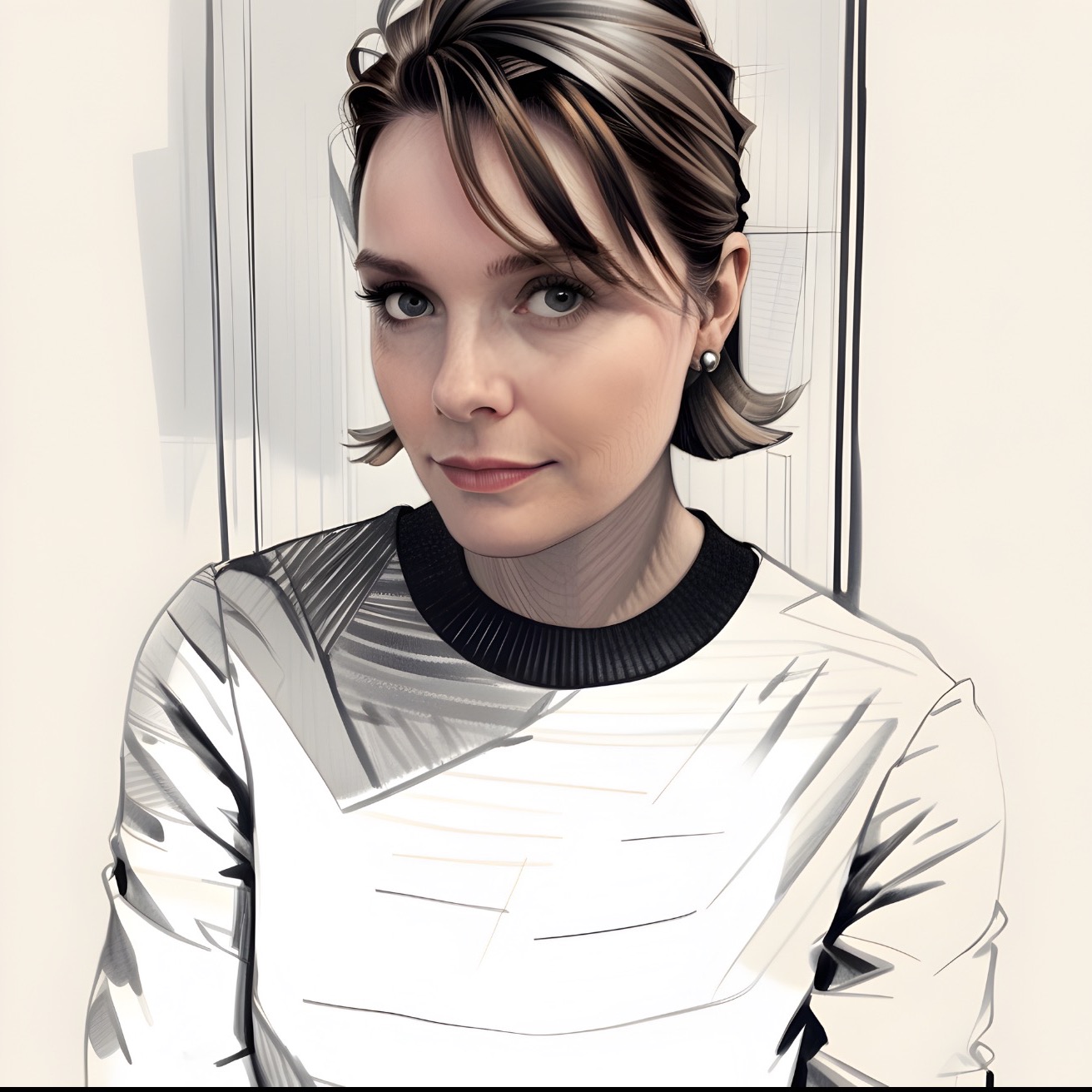
All the visuals used by Radio Good News — website, app, station, promotional material and social media — were created by Stephan Boyer using generative artificial intelligence tools, in particular Midjourney and OpenAI ChatGPT.
Under the official terms of these platforms, the user retains ownership of the images generated (“You own all the images and videos you create.” — Midjourney; “You retain your ownership rights in Input and own the Output.” — OpenAI), together with the rights of reproduction, modification, publication, broadcasting and commercial exploitation.
Ownership and responsibility. Stephan Boyer, founder and operator of Radio Good News, declares that he is the sole creator and rights holder of all the musical and visual content broadcast under the Radio Good News brand, and that he assumes full responsibility for its use, distribution and monetisation, in compliance with applicable law and platform rules. To the best of his knowledge, this content neither reproduces nor infringes the intellectual property rights of third parties.
© 2026 Radio Good News — Stephan Boyer. All rights reserved.